
Queensland
Understanding road laws

Introduction
This page explains the main road rules in Queensland for travelling in cars. These rules include exemptions where a person with a disability or medical condition needs an alternative restraint or method of travel.
But research shows these exemptions don’t always keep people safe. To support safer outcomes, we recommend seeking an assessment from a trained allied health professional.

Queensland road rules
The Queensland Road Rules provide requirements for how people must be restrained when travelling in a motor vehicle, in the following age groups:
• Under 6 months
• 6 months to under 4 years
• 4 years to under 7 years
• 7 years to under 16 years
• 16 years and over
The rules define approved vehicle restraints, which are generally Australian standard car seats and seatbelts that comply with the Australian Design Rules. The type of vehicle restraint required will depend on the person's age and size.
Where a person with a disability or medical condition is unable to travel in an approved vehicle restraint, there are road rule exemptions that allow the person to travel in an alternative way.
Exemptions
An exemption is required when a person is prescribed a non-approved vehicle restraint, or is unable to wear the seatbelt properly adjusted and fastened. Examples of alternative methods of travel include:
- special purpose car seat
- modified Australian standard car seat
- specialty harness/vest
- additional recline (which may mean the seatbelt is not being worn properly adjusted and fastened)
- in rare cases, no child restraint or vehicle seatbelt
There is also an exemption to allow a child under 7 years to travel in the front row of a vehicle, which has two or more rows, due to their disability or medical condition.
The most common road rule exemptions are listed below. There are also specific requirements for the legal use of seatbelt buckle covers (see below).
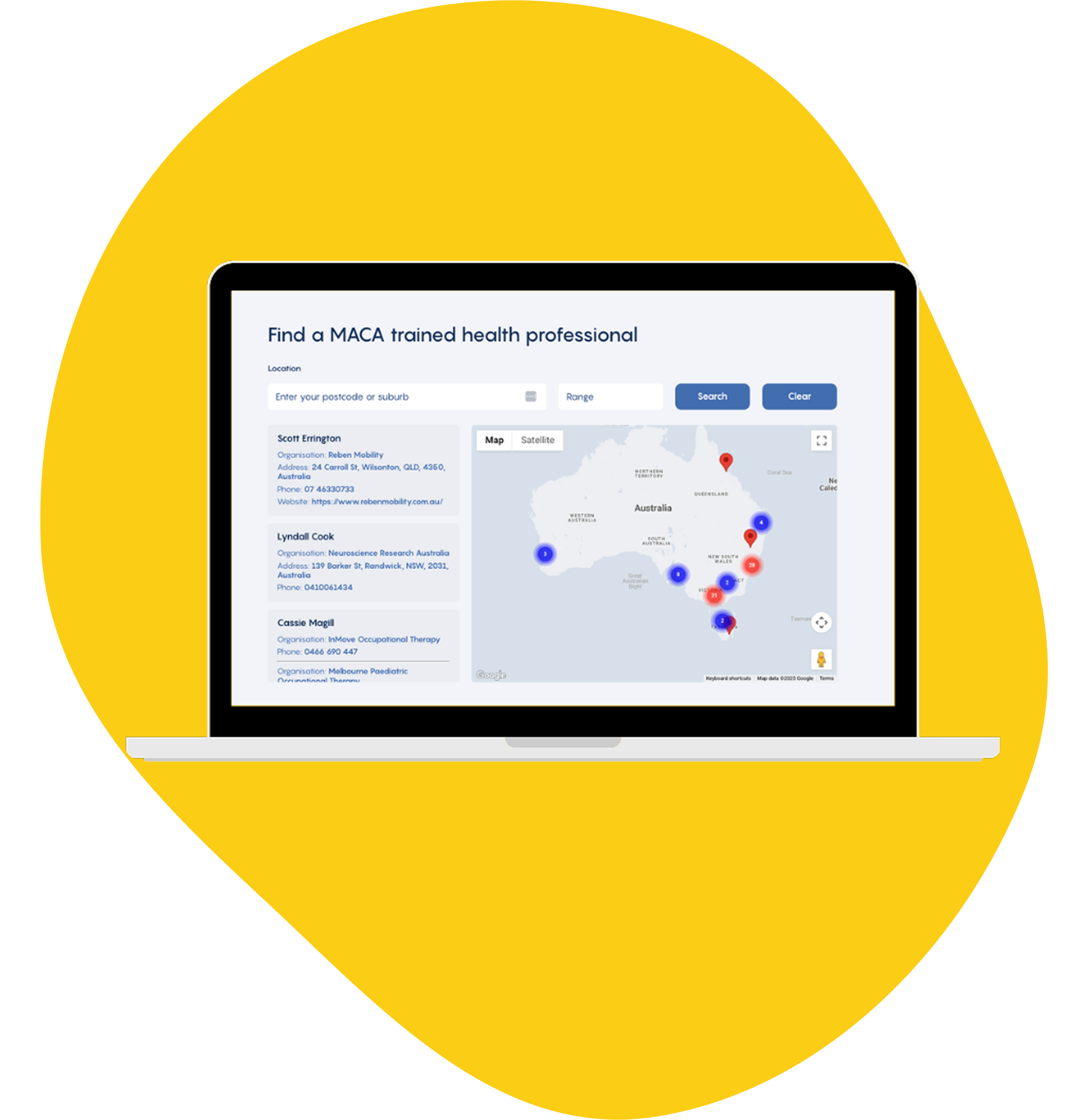
MACA Certified Professionals can help families and clients comply with these requirements. In some cases they will recommend obtaining and registering a seatbelt exemption certificate with the Queensland Government. This may reduce the risk of receiving a camera-detected seatbelt infringement or assist during an infringement enquiry process, where an infringement is received.
Road rules
There are different road rule exemptions depending on the age of the person and how they are travelling in the vehicle.
The following definitions apply to the professionals who are authorised to provide specific exemptions:
Specialist means a doctor, occupational therapist, psychologist, physiotherapist or biomedical engineer.
Health practitioner means a doctor, occupational therapist or physiotherapist.
Doctor means a medical practitioner.

Under 16 years - prescribed by a specialist
You are exempt from transporting a child in an approved vehicle restraint, providing:
*the passenger is restrained in a child restraint prescribed by a specialist in accordance with AS/NZS 4370
*you are carrying an Advice to Parent form prescribed in accordance with AS/NZS 4370
*you are complying with any conditions in the form
*you produce the form to a police officer when asked
*the form has not expired
NOTE: This exemption only applies in Queensland.
All ages - doctor certificate
A person is exempt from travelling in a vehicle seatbelt providing the person is carrying a certificate that:
*is signed by a doctor
*states that in the doctor's opinion the person should not wear a seatbelt
*displays a date of issue not more than 12 months after the issue date and has not expired
*the person is complying with any condition in the certificate (e.g., travelling in an alternative restraint system or in rare cases no seatbelt)
*produces the certificate in accordance with the requirements for police or camera detected enforcement
NOTE: This exemption can be used where a person is travelling in an alternative restraint (e.g., special purpose car seat, modified restraint).
Under 7 years - front row of vehicle
You are exempt from the rule requiring the child to travel in the rear row of a vehicle with two or more rows providing you are carrying a certificate:
*signed by a health practitioner
*stating the passenger must not be in a row of seats behind the front row of a vehicle, because of the passenger’s medical condition or disability
*displaying a date of issue and an expiry date that is not more than 7 years after the issue date
NOTE: The road rules allow a child 7 years of age and over to travel in the front row.
Requirements may differ in other states and territories.

Complying with vehicle standards - seatbelt buckle covers
Queensland's safe movement guideline provides guidance for exemptions for vehicles fitted with seatbelt buckle covers for use by passengers with disabilities or medical conditions when travelling in a vehicle in Queensland.
Complying with the requirements in the guidelines exempts a vehicle from relevant vehicle standards requirements.
Transport safety advice for parents/clients
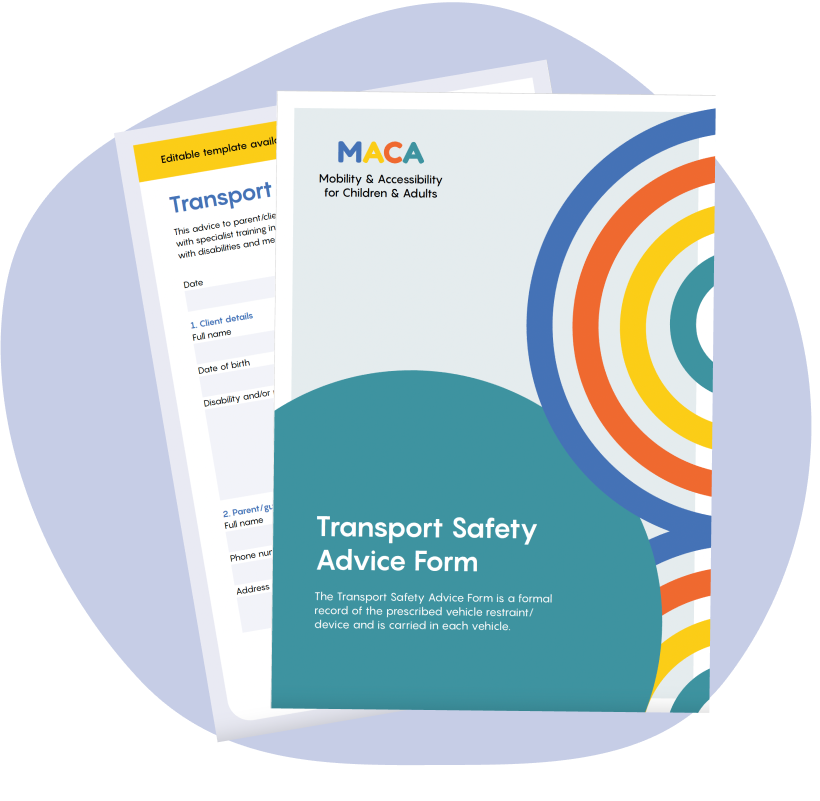
MACA recommends that a Transport Safety Advice Form be completed by a prescriber (e.g., occupational therapist) where a person with disability/medical condition has been assessed and prescribed an alternative method of travel.
It is recommended that you carry this advice to parent/client form in the vehicle the person travels in at all times, as it provides important information about the prescribed method of travel.
This form has been developed for use by MACA Certified Professionals and is available from MACAhub Pro.
FAQs

Australian Road Rules Review
MACA welcomes and strongly supports updates to child restraint rules in the Australian Road Rules. Proposed changes being considered are outlined in the National Transport Commission (NTC) Issues Paper. As a member of the NTC’s Expert Advisory Group, MACA actively contributed to the development of the paper.
A summary report outlining the feedback received during the consultation is available on the NTC website.
Next steps
The NTC will use feedback from the Issues Paper consultation to inform the development of a regulation impact statement.
A further round of public consultation is expected mid-2026.

Can’t find what you’re looking for?
Get in touch for help

